 English

Description
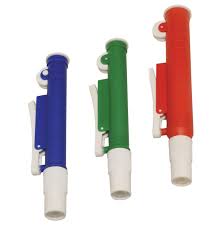
A pipette pump is a laboratory tool used to accurately aspirate and dispense liquids, typically paired with serological or volumetric pipettes. Operated by a thumbwheel, it provides precise control for filling, while a side plunger or valve allows for rapid dispensing. They are generally designed for capacities of 2, 10, or 25 mL.
Key Features and Types
- Manual Pumps: Cost-effective, single-hand operation devices operated by a thumbwheel to draw liquid, often color-coded by volume (e.g., blue for 2mL, green for 10mL, red for 25mL).
- Electronic Controllers: Battery-powered, ergonomic devices designed for faster liquid handling and high-throughput labs.
- Safety & Design: Made of durable, acid-resistant plastic, they feature a, often, knurled thumb wheel for fine control.
- Compatibility: Designed for use with glass or plastic serological and volumetric pipettes.
Key Considerations
- Maintenance: Easily disassembled for cleaning.
- Volume Capacity: Generally handles volumes ranging from
0.1mL to 100 mL.
- Safety: Used to prevent oral pipetting, especially with hazardous or corrosive substances.
 0.1mL to 100 mL.


Reviews
There are no reviews yet.